

EMDR Statistics
Jan 21st 2026
Interest in Eye Movement Desensitization and Reprocessing (EMDR) therapy has grown steadily over the past several decades, driven not by novelty, but by a substantial and expanding body of empirical research. As mental health professionals, policymakers, and the public increasingly demand evidence-based interventions, EMDR Statistics have become central to evaluating its clinical relevance, effectiveness, and long-term viability as a trauma treatment.
Originally developed in the late 1980s by Francine Shapiro, EMDR has evolved into one of the most extensively studied non-pharmacological treatments for post-traumatic stress disorder (PTSD). Beyond PTSD, EMDR has been investigated across a wide range of trauma-related and psychological conditions, with research conducted in clinical, military, disaster-response, and public health settings worldwide.
The following EMDR Statistics compile findings from controlled trials, longitudinal follow-ups, comparative studies, and global implementation data. Together, they provide a quantitative overview of treatment outcomes, durability of benefits, scope of use, and institutional recognition. These statistics are intended to offer a factual foundation for understanding where EMDR is most effective, where its limitations lie, and how it compares to other established trauma-focused therapies.
General EMDR Research Volume
- EMDR has been studied in 30+ controlled clinical trials
- EMDR research spans nearly 40 years (late 1980s to present)
- EMDR is researched across 130+ countries
- EMDR is one of the most researched non-pharmaceutical trauma treatments
- EMDR research includes:
- Randomized controlled trials
- Meta-analyses
- Longitudinal follow-up studies
- EMDR studies include civilian, military, disaster-related, and clinical populations
- EMDR trials include treatment durations ranging from 3 sessions to 12 weeks
- EMDR follow-up studies range from 3 months to 5 years
- EMDR outcomes have been measured using:
- PTSD diagnostic criteria
- Symptom severity scales
- Functional impairment measures
PTSD Treatment Outcomes – Single-Incident Trauma
- 84–90% of single-incident trauma patients no longer met PTSD diagnostic criteria after 3 EMDR sessions (90 minutes each) in controlled studies
- 100% remission of PTSD diagnosis reported for single-event trauma in specific controlled trials
- Single-incident trauma treatment durations ranged from 3 to 6 EMDR sessions
- Symptom reduction observed within weeks rather than months
- EMDR outcomes for single-incident trauma showed:
- Reduced re-experiencing symptoms
- Reduced avoidance behaviors
- Reduced hyperarousal symptoms
- Studies measured outcomes immediately post-treatment and at follow-up
- Follow-up assessments showed sustained symptom reduction in the majority of single-trauma cases
PTSD Treatment Outcomes – Multiple or Complex Trauma
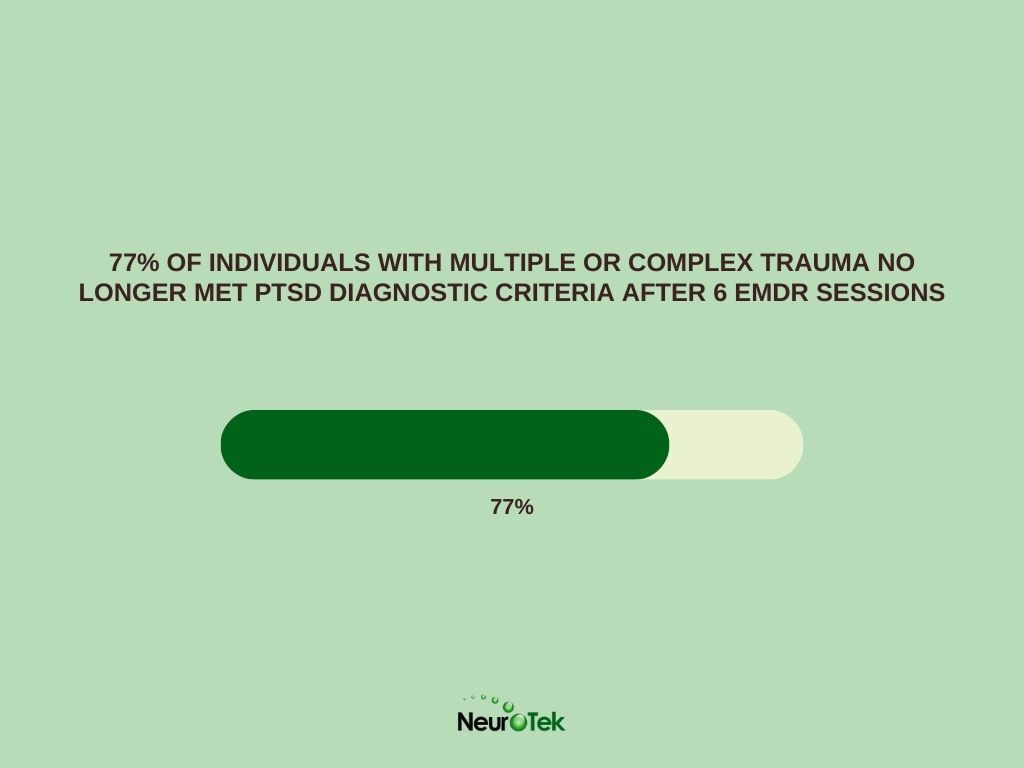
- 77% of individuals with multiple or complex trauma no longer met PTSD diagnostic criteria after 6 EMDR sessions
- EMDR treatment durations for complex trauma ranged from 6 to 12 sessions
- Complex trauma populations showed lower response rates than single-incident trauma populations
- EMDR treatment outcomes for complex trauma included:
- Reduced PTSD symptom severity
- Improved emotional regulation
- Decreased physiological arousal
- Complex trauma studies included participants with:
- Childhood trauma histories
- Repeated interpersonal trauma
- Combat exposure
- Follow-up studies indicated that completion of full EMDR protocols correlated with better outcomes
Combat-Related PTSD Outcomes
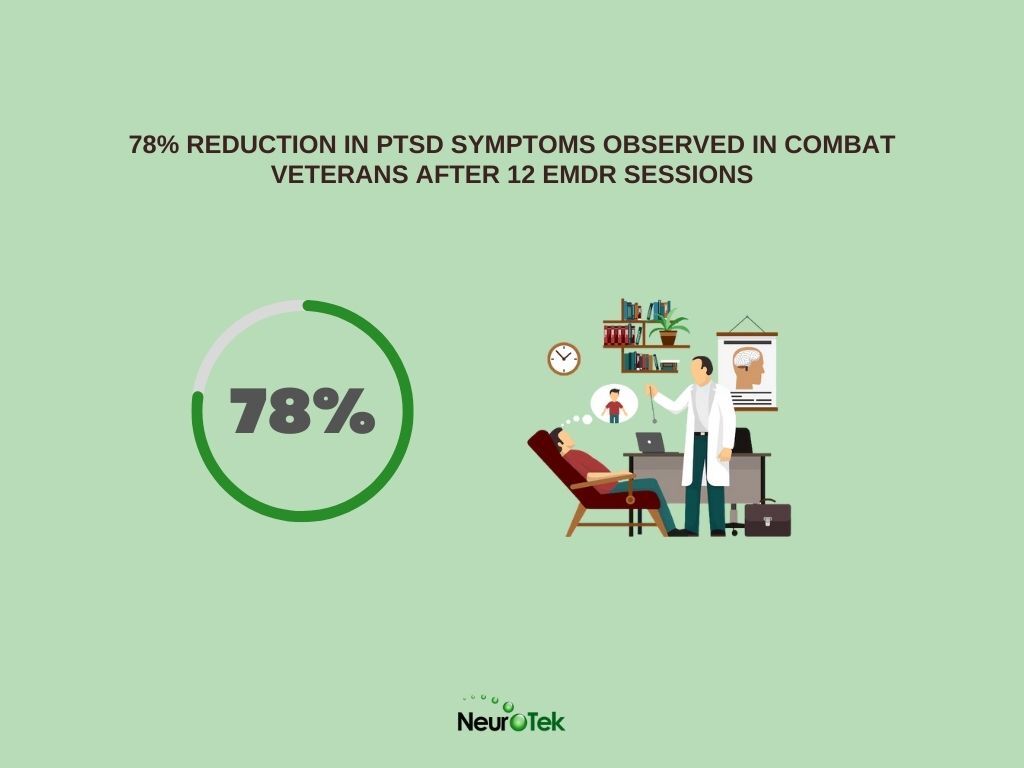
- 78% reduction in PTSD symptoms observed in combat veterans after 12 EMDR sessions
- EMDR treatment durations in military populations ranged from 6 weeks to 12 weeks
- EMDR was evaluated in:
- Active-duty service members
- Veterans
- Former combatants
- Combat-related EMDR studies measured:
- Intrusive memories
- Nightmares
- Hypervigilance
- Follow-up assessments showed maintenance of treatment gains at 9 months post-treatment
- Studies noted diminished outcomes when participants did not complete full EMDR treatment courses
Sexual Assault-Related PTSD Outcomes
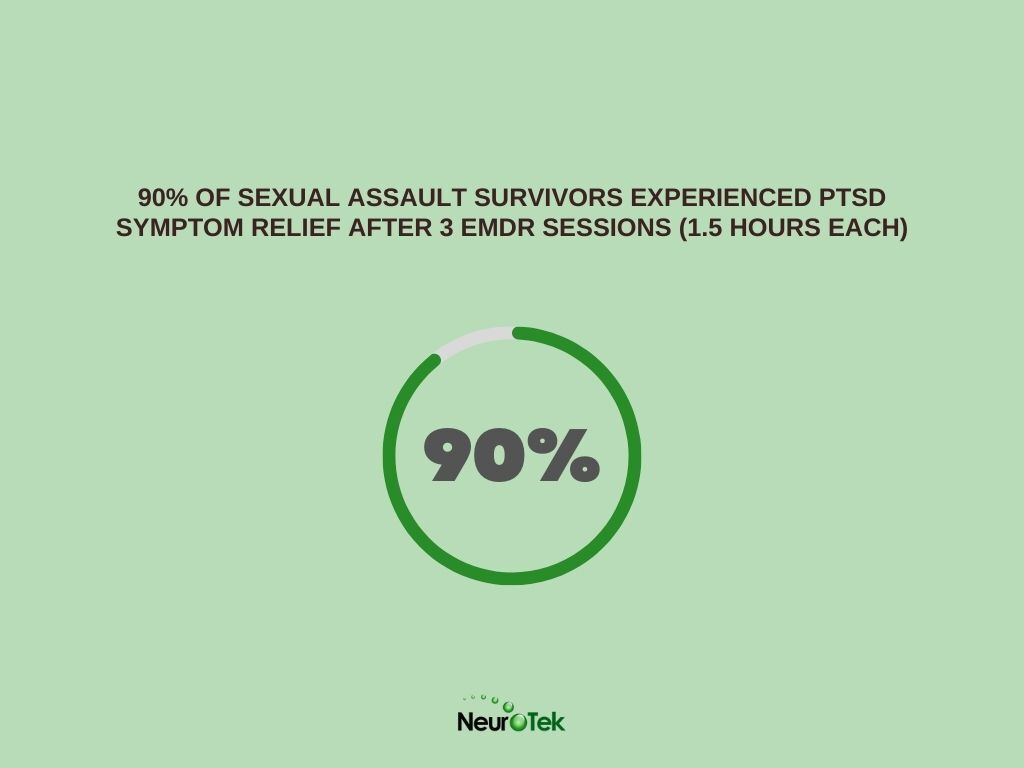
- 90% of sexual assault survivors experienced PTSD symptom relief after 3 EMDR sessions (1.5 hours each)
- EMDR treatment durations ranged from 3 to 6 sessions in sexual assault studies
- Outcome measures included:
- PTSD diagnostic criteria
- Symptom severity scales
- EMDR studies included non-military participants
- EMDR showed faster symptom reduction compared to longer-duration therapies in controlled conditions
Accidents and Assault-Related PTSD Outcomes
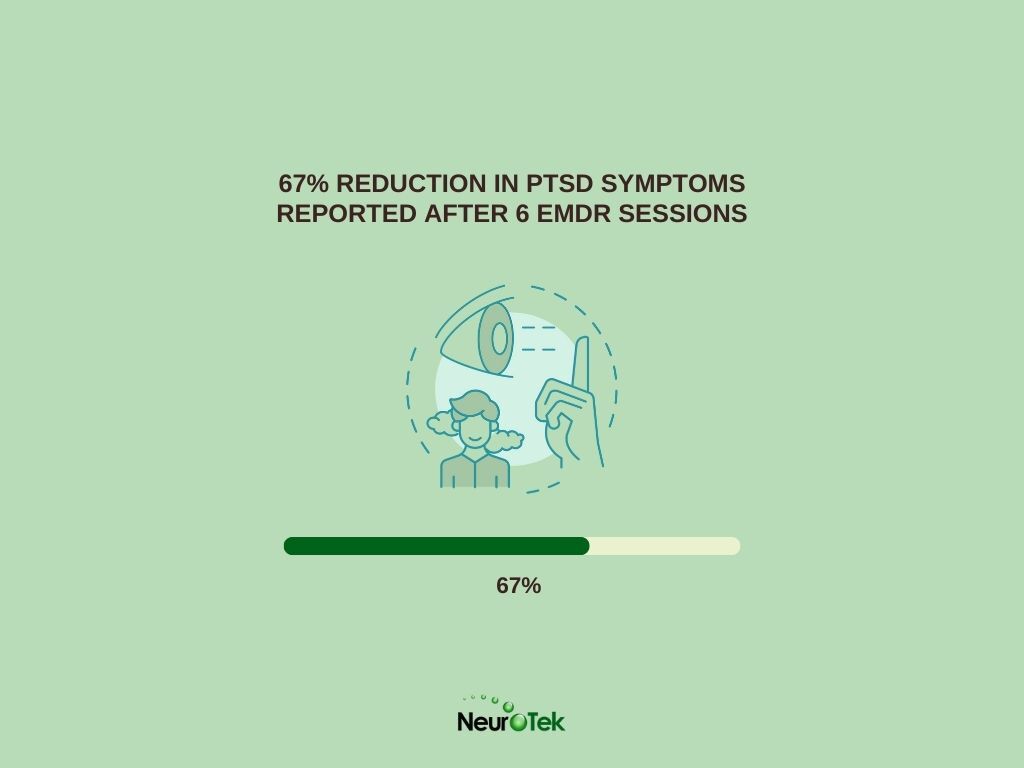
- 67% reduction in PTSD symptoms reported after 6 EMDR sessions
- EMDR treatment durations ranged from 6 to 8 sessions
- Trauma sources included:
- Motor vehicle accidents
- Physical assault
- EMDR outcomes showed:
- Reduced intrusive memories
- Reduced physiological distress
- Follow-up assessments indicated symptom improvement was maintained when treatment was completed
Natural Disaster-Related Trauma Outcomes
- EMDR studies conducted following:
- Earthquakes
- Aftershocks
- Disaster-related EMDR research conducted in:
- Mexico
- Italy
- EMDR treatment resulted in statistically significant reductions in PTSD symptoms
- Follow-up assessments at 12 weeks showed maintained symptom relief
- EMDR treatment was delivered in both individual and group formats in disaster contexts
Tinnitus and EMDR (tEMDR) Study Statistics
- Study conducted by Norfolk and Norwich University Hospital NHS Foundation Trust (2019)
- EMDR intervention focused on tinnitus-related distress
- Clinically significant improvement observed in the majority of participants
- Statistically significant symptom reduction observed post-treatment
- Treatment effects maintained at 6-month follow-up
- Study protocol included a diverse tinnitus patient population
- EMDR protocol adapted specifically for tinnitus-related distress

Comparative Treatment Effectiveness Statistics
- EMDR demonstrated outcomes comparable to trauma-focused CBT in PTSD treatment
- EMDR showed superior outcomes compared to:
- Waitlist controls
- Placebo conditions
- Supportive listening
- Relaxation training with biofeedback
- EMDR outperformed:
- Psychodynamic therapy (non-trauma-focused)
- Behavioral therapy (non-trauma-focused)
- EMDR showed superior symptom reduction compared to fluoxetine (Prozac) in at least one NIMH-funded study
- EMDR produced faster symptom reduction in some trials compared to longer-duration therapies
Placebo and Control Comparisons
- EMDR demonstrated statistically significant benefits compared to:
- No-treatment controls
- Active listening controls
- EMDR outcomes exceeded those of:
- Relaxation-only interventions
- Supportive counseling without trauma processing
- EMDR effects exceeded placebo effects in controlled trials
Long-Term Outcome and Follow-Up Statistics
- Follow-up period s ranged from 3 months to 5 years
- 8 out of 9 civilian PTSD studies showed maintenance of treatment gains
- 1 out of 9 civilian studies showed deterioration of treatment gains
- Combat veteran follow-up studies showed maintained benefits at 9 months
- Studies with incomplete treatment showed:
- Reduced durability of outcomes
- Partial symptom return
- Full protocol completion correlated with sustained improvement
Global Adoption and Usage Statistics
- EMDR practiced in 130+ countries
- Millions of individuals have received EMDR-informed treatment worldwide
- EMDR training and practice spans:
- Public health systems
- Private practice settings
- Military and veteran healthcare systems
- EMDR has been in continuous clinical use since 1987
- EMDR has expanded beyond PTSD into additional clinical domains
Practitioner and Organizational Statistics
- EMDR is recognized as a first-line PTSD treatment by:
- American Psychiatric Association
- World Health Organization
- U.S. Department of Veterans Affairs
- Department of Defense
- National Institute for Health and Care Excellence
- EMDR is categorized as a Category A PTSD psychotherapy by the U.S. Department of Veterans Affairs & Department of Defense
- EMDR is endorsed alongside trauma-focused CBT in national treatment guidelines
Session Structure and Duration Statistics
- EMDR sessions range from 50 to 90 minutes
- Typical EMDR treatment courses range from:
- 3 sessions (single-incident trauma)
- 6–12 sessions (complex trauma)
- EMDR treatment frequency is typically:
- Weekly
- Biweekly
- Shorter treatment duration correlated with:
- Single-event trauma
- Fewer comorbid conditions
Adjunct and Combined Treatment Statistics
- EMDR is frequently used:
- As a standalone trauma treatment
- As part of a broader psychotherapeutic plan
- Studies indicate greater benefit when EMDR is:
- Integrated into comprehensive trauma care
- Completed as a full treatment course
Additional Symptom Domains Studied with EMDR
- EMDR research includes symptom reduction in:
- Anxiety
- Depression
- Panic symptoms
- Phobias
- Performance anxiety
- Cravings
- Triggers
- Evidence strength varies by symptom domain
- PTSD remains the most extensively studied indication
Conclusion
Taken as a whole, the body of EMDR Statistics presents a consistent pattern: EMDR is a well-researched, widely implemented, and clinically effective psychotherapy for trauma-related conditions, particularly PTSD. Across multiple populations—including civilians, combat veterans, disaster survivors, and assault victims—studies repeatedly demonstrate meaningful symptom reduction, often within relatively short treatment timeframes.
Long-term follow-up data further indicate that treatment gains are frequently maintained when individuals complete a full course of EMDR, while incomplete treatment is associated with weaker or less durable outcomes. Comparative research shows that EMDR performs at least on par with other gold-standard trauma therapies and exceeds placebo or non-trauma-focused interventions in controlled conditions.
Equally important, EMDR’s recognition by major national and international health organizations underscores its legitimacy within mainstream mental health care. While EMDR is not a universal solution and is not equally effective for every condition or individual, the statistical record supports its role as a first-line, evidence-based option within trauma treatment.
In summary, EMDR Statistics do not point to a fringe or experimental method. They document a mature therapeutic approach with decades of empirical support, global adoption, and measurable clinical impact when applied appropriately and responsibly.
Sources
[1] World Health Organization (WHO).
Guidelines for the Management of Conditions Specifically Related to Stress.
https://www.who.int/publications/i/item/WHO-MSD-MER-17.5
[2] U.S. Department of Veterans Affairs / Department of Defense (2023).
VA/DoD Clinical Practice Guidelines for PTSD.
https://www.ptsd.va.gov/professional/treat/txessentials/cpg_ptsd_management.asp
[3 National Institute for Health and Care Excellence (NICE, UK).
Post-Traumatic Stress Disorder (NG116).
https://www.nice.org.uk/guidance/ng116
[4] American Psychological Association (APA).
Clinical Practice Guideline for the Treatment of PTSD.
https://www.apa.org/ptsd-guideline
[5] National Library of Medicine / PubMed.
EMDR Meta-Analyses and Randomized Controlled Trials.
https://pubmed.ncbi.nlm.nih.gov/